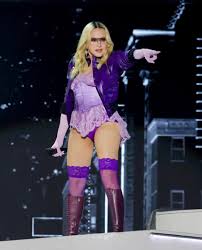
In an unexpected postscript to an already headline-heavy weekend at the Coachella Valley Music and Arts Festival, Madonna has once again become the center of global attention—but this time, not for her performance. Instead, the conversation has shifted to controversy after reports surfaced that several of her vintage-inspired outfits were stolen following her appearance, triggering a wave of speculation, outrage, and digital chaos.
What began as a fashion moment quickly escalated into a full-blown internet storyline. Madonna’s archive-heavy styling, already under intense discussion during the festival, took on a new layer of intrigue once details of the alleged theft began circulating online. Within hours, the narrative shifted from “iconic look” debates to questions of security, access, and how high-profile fashion pieces are managed in the volatile environment of large-scale cultural events.
The internet response followed a familiar pattern, but at an accelerated speed. Clips of her appearance were re-circulated alongside theories about what exactly was taken, how it happened, and who might be responsible. Memes, commentary threads, and speculative breakdowns flooded platforms, turning what may be a logistical or security issue into a rapidly evolving cultural mystery. In 2026, incidents involving celebrities rarely remain contained—they expand into layered narratives shaped collectively by audiences in real time.
Part of what fueled the intensity is Madonna’s own relationship with fashion history. Her use of archival and vintage pieces has long been central to her public identity, making the reported loss of these items feel symbolically significant to fans and commentators alike. The outfits were not just clothing—they were perceived as part of her ongoing visual legacy. That framing elevated the story beyond a simple theft into something closer to cultural disruption.
The speed of reaction also reflects how modern celebrity news functions. Traditional reporting cycles no longer define the lifespan of a story. Instead, audience interpretation drives momentum first, with media coverage following behind. By the time official details are confirmed or clarified, the internet has already constructed multiple versions of what happened, each competing for attention and plausibility.
At the same time, the incident highlights how blurred the line has become between performance, fashion, and content. At major festivals, every element—from styling choices to backstage logistics—exists within a highly visible ecosystem. Nothing remains purely private for long. Even post-event developments can become as influential as the performance itself, shaping how the entire experience is remembered.
For Madonna, the situation adds yet another layer to a weekend already defined by cultural resurfacing, generational crossover, and stylistic debate. What was initially framed as a return to festival relevance has now expanded into a multi-threaded narrative that includes performance, fashion discourse, and controversy—all circulating simultaneously across platforms.
Ultimately, the frenzy around the missing outfits underscores a defining reality of modern celebrity culture: nothing ends when the show does. Every moment continues to evolve online, sometimes in directions no one anticipates. And in that environment, even a wardrobe becomes part of the story long after the stage lights go down.