Awards season has a funny way of changing the celebrity conversation.
For months, television audiences may know an actor without necessarily thinking of them as an “awards person.” They may recognize the face, remember the character, enjoy the performance and then move on to the next episode. But once nominations arrive, and especially once trophies start being handed out, everything can change.
Suddenly, the supporting actor everyone liked becomes a name worth remembering. The guest star who appeared in only a handful of episodes becomes part of the awards conversation. A performer who had been quietly doing excellent work gets a much bigger spotlight.
That transformation is already happening at the 2026 Emmys.
The first two nights of this year’s Emmy celebrations, held September 5 and 6, put an unusually strong emphasis on supporting and guest performances. The weekend included supporting acting categories for limited or anthology series as well as guest acting categories across comedy and drama. Several performers walked away with their first Emmy wins, instantly giving their careers a new awards-season chapter.
One of the clearest examples is David Harbour.
For years, Harbour has been a recognizable television presence, particularly because of Stranger Things. But his Emmy story changed dramatically this weekend when he won Outstanding Supporting Actor in a Limited or Anthology Series or Movie for DTF St. Louis.
It was his first Emmy win.
That makes the victory bigger than simply another award for a familiar actor. It gives Harbour a new piece of career history and gives audiences another reason to look at the work he has been doing beyond the role that made him internationally recognizable.
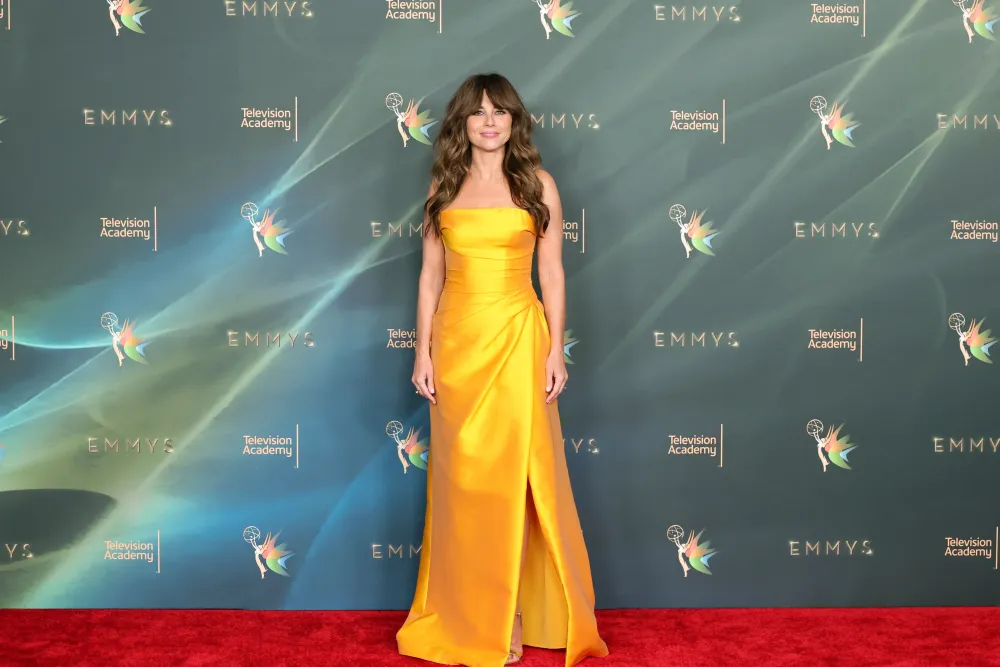
Linda Cardellini experienced a similar awards-season breakthrough, winning Outstanding Supporting Actress in a Limited or Anthology Series or Movie for DTF St. Louis. Like Harbour, Cardellini is hardly an unknown. She has spent years moving between television, film and major ensemble casts. Yet an Emmy win can create a different kind of visibility, reminding audiences that a familiar actor can still have an entirely new awards moment.
Then there are the performers who made their mark in guest roles.
Betty Gilpin won Outstanding Guest Actress in a Comedy Series for Widow’s Bay, earning her first Emmy for the performance. Her victory was part of the show’s extraordinary eight-award haul across the second night of the ceremony.
Gilpin’s win is particularly interesting because guest performances can sometimes exist in a strange space within television. The actor may not be part of the show’s regular ensemble, but a well-written guest appearance can become one of the most memorable pieces of an entire season.
That is exactly what happened here.
A guest appearance can be brief, but brevity does not necessarily mean insignificance. In some cases, an actor enters the story, changes its energy and leaves before audiences have become accustomed to seeing them every week. That can make the performance stand out even more.
Shailene Woodley also found herself back in the Emmy spotlight, winning Outstanding Guest Actress in a Drama Series for Paradise. The victory marked her first Emmy win after a previous nomination for Big Little Lies.
Again, the story is bigger than the trophy.
Woodley was already an established name long before this Emmy. But awards recognition can change how a particular chapter of an actor’s career is remembered. A performance that might otherwise have been discussed primarily by fans of the series now has an official place in the awards record.
Then came Ernest Harden Jr., who won Outstanding Guest Actor in a Drama Series for his performance in The Pitt. It was his first Primetime Emmy nomination and first win.
His victory is perhaps the clearest example of the phenomenon.
Before the Emmy ceremony, Harden was not necessarily a household name. After it, he became one of the performers associated with one of the most talked-about moments of the television awards season.
That is what awards can do.
They can take a performance that was appreciated by viewers and critics and give it a much larger cultural footprint.
The weekend also produced one of the most emotional guest-acting stories of the season when Rob Reiner received a posthumous Emmy for his guest appearance on The Bear. The win came 48 years after his previous acting Emmy for All in the Family, creating a remarkable bookend to his television career.
Reiner’s victory illustrates another reason guest performances can become important during awards season: sometimes the individual performance becomes inseparable from the larger story surrounding the actor.
In this case, the Emmy was simultaneously about television history, an acclaimed series, a beloved performer and the emotional response of an industry remembering his work.
It became a moment.
And moments are what awards seasons are built around.
That is also why the Creative Arts Emmy results can be more revealing than casual viewers might expect. While the September 14 Primetime Emmy ceremony will receive the majority of mainstream attention, the earlier ceremonies have already established a collection of names and stories that could dominate entertainment coverage in the days ahead.
Widow’s Bay, for example, has emerged as one of the weekend’s biggest winners, taking eight Emmys. DTF St. Louis followed with six, while The Pitt and Pluribus each collected four.
But it is the individual performances within those shows that can create new celebrity narratives.
Awards coverage has a way of making people look twice.
An actor who had previously been described as “the supporting player” can suddenly become “Emmy winner.” A guest performer can go from appearing in one memorable episode to becoming one of the names associated with the season. Someone who has spent years being nominated without winning can suddenly have a career milestone that changes the conversation around them.
And that can have an effect beyond the ceremony itself.
Awards recognition can lead audiences to revisit older work. It can introduce performers to viewers who missed their previous projects. It can make casting directors, producers and studios pay closer attention to someone who had previously operated below the center of the celebrity spotlight.
There is also something particularly appealing about discovering an awards-season name before everyone else catches on.
That is why supporting and guest categories can become so much fun for television fans.
The biggest stars are often already known.
The supporting players can surprise you.
The guest stars can come out of nowhere.
And the awards can reveal just how much talent has been operating around the central characters all along.
This year’s Emmy weekend is particularly good evidence of that.
The ceremony has already highlighted performers with very different career stories. Harbour represents the established star finally receiving a major acting Emmy. Cardellini represents another longtime performer reaching an important awards milestone. Woodley returns to the Emmy spotlight with a guest performance that earned her first win. Harden Jr. becomes a first-time nominee and winner. Gilpin turns a guest appearance on one of the weekend’s biggest winners into her first Emmy.
None of those stories are identical.
That is precisely why they are interesting.
Awards season does not just crown the biggest celebrity. Sometimes it changes who the audience considers a celebrity worth watching.
There is another factor at work, too: television itself has become increasingly dependent on ensemble storytelling.
The streaming era has created enormous casts, sprawling limited series and shows where individual episodes can function almost like short films. A performer may appear for only a small portion of a season but still be given material powerful enough to leave a lasting impression.
The Emmy categories recognize that reality.
Guest acting is not simply an award for “less screen time.” It can be an acknowledgment that someone made an outsized contribution within a limited opportunity.
And that can be a useful reminder for audiences.
The person who dominates the poster is not always the person who delivers the scene you remember six months later.
Sometimes it is the actor who appears halfway through the season.
Sometimes it is the character who arrives just when the story needs a new emotional direction.
Sometimes it is the performer who has spent years working consistently without receiving the kind of attention that arrives with an awards nomination.
Then suddenly, everyone knows their name.
That is the awards-season effect.
And with the main Emmy ceremony still ahead on September 14, the list of names worth watching is likely to grow.
The first weekend has already provided plenty of clues about which shows have momentum and which performances have captured voters’ attention. But the biggest television categories have not yet been decided, meaning there is still plenty of room for another actor to have their breakout moment.
For viewers, that makes the final stretch of Emmy season more interesting than simply asking which famous actor will win.
The better question might be: Who are we going to be talking about after the ceremony?
Because awards season has a habit of creating new names.
Sometimes they are completely new to us.
Sometimes they are actors we have been watching for years without realizing how close they were to a career-defining moment.
And sometimes all it takes is one episode, one performance and one envelope being opened onstage.
That is how supporting players become stars to watch.
That is how guest appearances become career milestones.
And that is how awards season can make a familiar face feel like a discovery all over again.
References
ViceInsider.com — The Stars Who Just Became Awards-Season Names To Watch
Television Academy — 78th Emmys Night Two recap
People — David Harbour wins his first Emmy
People — Betty Gilpin wins Guest Actress Emmy for Widow’s Bay
Forbes — Shailene Woodley wins Guest Actress Emmy for Paradise